Monday, June 4, 2018

THE WEEKLY RECAP: May 28 - June 3


Divorce Italian Style (1961)

Directed by Pietro Germi

* * * ½

Though Rosalia (Daniela Rocca) is deeply in love with her husband Cefalu (Marcello Mastroianni), the feelings are not mutual on his end, as he has grown insufferably bored with her – double frustrating for him that he has fallen in love with another woman, the young beauty Angela (Stefani Sandrelli). Too bad for Cefalu, as this is contemporary Italy under the iron fist of the Catholic Church’s rule, thus making divorce illegal. Cefalu just can’t take it anymore, though, and will do whatever it takes to get out of this marriage – even if it means killing his wife. He becomes totally enraptured by this idea (which seems to be more seductive than the young woman he longs for), and begins concocting a plan to set his wife up with another man so he can fraudulently get away with committing an honor killing.

Divorce Italian Style is about as early-‘60s Italian as you could get (and I have to admit; the title alone got my attention). Personally, I quite enjoyed this film, and I doubt I would have thought otherwise – after all, it does star the handsomely enigmatic Marcello Mastroianni, one of my favorite actors from this time period. But take him out of the picture, and we’ve still got a riveting yet morbid comedy on man’s almost childish inability to be sexually satisfied, as well as a terrific satire on the effects of theocratic rule. Combine that with an incredible score and sharper than sharp editing, and you’ve got yourself a solid movie (not to mention that it’s topped off with an exquisitely satisfying end image).

I think what makes this film so funny is just how much Cefalu fawns over the idea of his plans for his wife. A pretty morbid statement, but bear with me: in the beginning of the film, he can’t get over this Angela girl, but the more he descends into his intricate plans, there is so little regard for Angela that it’s almost like Cefalu forgot about exactly why he wants his wife dead in the first place. If I have any complaints with this film, it actually has something to do with this: the film seems to spend more time with Cefalu’s fantasies instead of the execution of his devious plot. I just can’t help but feel like there were major missed opportunities for great comedic moments (just imagine everything that could go wrong). Nonetheless, Divorce Italian Style is from a Golden Era of Italian cinema, and this is no exception.


Downsizing (2017)

Directed by Alexander Payne

* * ½

With hopes to curtail the effects of global warming and overpopulation, a potential solution has bestowed upon mankind in a scientific breakthrough called “downsizing”, where human beings are irreversibly shrunk down to five inches. Those that have gone through with the process couldn’t possibly regret the decision, as they are now enabled to live larger than large in gigantic homes and beautiful neighborhoods. Enter Paul (Matt Damon): he and his wife are in a tight financial situation and are contemplating downsizing to let those worries rule their life no more. They decide to go through with it…well, Paul decides to go through with it, as his wife backs out at the last minute. Left to his own lonesome devices, Paul ventures into this surreal new world, only to find out that the world of the downsized person may not live up to all the hype.

Without being patronizing to anybody who partakes in Crossfit; a friend of mine once described Crossfit as “[a workout where] everybody half-asses everything instead of full-assing one thing”, and I can kind of apply this thought to Downsizing. There are tons of themes and ideas going on here: the inability to escape one’s problems, selling out and conforming to live comfortably (there’s even a head-shaving montage reminiscent of Full Metal Jacket), humanity’s impending self-induced demise, and I’m probably missing several other themes. Downsizing juggles all of these, but perhaps it is just a bit too much for the film to handle, as nothing ever really completely culminates into something really gripping. As troubled as this juggling act is, it still presses forward with complete confidence.

As you can probably tell, I wasn’t too big on Downsizing, but I don’t think it is deserving of the severely negative backlash that it got upon release (it currently sits at 51%/22% on Rotten Tomatoes). While I don’t think Downsizing took complete advantage of everybody being five inches tall, the production design is actually quite spectacular. Hong Chau as a Vietnamese activist is absolutely wonderful and completely steals the spotlight. And I must be completely honest; this was made by Alexander Payne, a fellow Omaha boy, and when you see and hear anything Omaha related, it’s kind of difficult not to be charmed a little bit. I digress, though. Payne has never been one of my favorite filmmakers, and Downsizing is no exception to his track record, but it is still a spectacularly ambitious effort that deserves at least a little more credit.


The Rose (1979)

Directed by Mark Rydell

* * * *

In this fictional account of a rock and roll tragedy, Bette Midler takes center stage as spunky foul-mouthed rock icon Mary Foster (known better as the Rose) and she will live and die for the stage, where she pours hear heart, soul, and amazing voice into every single song her band performs. When she’s not performing, though, she finds herself at stressful odds with the various demands and pressures of the music industry, from life on the road to the ruthlessness of her record label. As her tour commences, she can take the heat no more, and her wellbeing declines into a torrent of substance abuse and toxic relationships.

Yeah, it’s a story we’re all too familiar with, and probably happens enough in real life that we don’t need movies about it – hell, The Rose is actually loosely based on the final days of Janis Joplin (the Joplin family declined to sell the rights to her story). Personally, I don’t care if it’s an overdone story, because this is an absolutely terrific film. Director Rydell observes the various escapades of the Rose with patient fascination that John Cassavetes would be proud of – instead of rushing to the drama, scenes start on an insignificant note and steadily unfold from there (a technique I wish more filmmakers would use).

But how could I talk about The Rose without Bette Midler’s absolutely phenomenal (and Oscar-nominated) performance? Off-stage, she portrays the downfall of a woman too famous, too young, too quick without a clue how to navigate the real world unbelievably well. On stage, not only does she rock on with furious passion, but also captures the victimization of the stage high – here is a woman who lives for nothing more than music and performance, and each concert she performs becomes a more and more desperate attempt at finding some reason to live. This movie is borderline, if not bona fide, perfect. My only complaint has nothing to do with the movie itself – when I was watching the DVD started skipping during Midler’s monologue prior to her final performance, but I caught the basic gist of it. Not only a phenomenal film, but one of the most underrated films in the Criterion Collection – I can’t wait to add The Rose to my Barnes & Noble shopping bag this upcoming July sale.


Stardust Memories (1980)

Directed by Woody Allen

* * ½

Once a master of beloved comedies, filmmaker Sandy Bates (Woody Allen) finds himself becoming more and more alienated from audiences, who speak of nothing but coldness for his more recent efforts (allegedly more somber and artistic films) and cry out for Sandy to return to the glory days  of his magical comedies. Now attending a retrospect of his filmography, Sandy finds himself practically suffocated by an endless torrent of adoring fans, film enthusiasts, aspiring actors, etc. When he catches a break from people, he seems only capable of retreating to his interactions with various women (and the staple neuroses and insecurities included), not to mention he is eternally haunted by ex-girlfriend Dorrie (Charlotte Rampling).

Sound familiar, even by the slightest bit? Well, it’s no secret whatsoever that Stardust Memories is Woody Allen’s homage to the Fellini masterwork 8 ½. To me, Allen’s film is similar to hearing a modern band’s cover of a classic rock song – it’s amusing and admirable, but doesn’t leave much of a long-lasting impression and kind of makes you wish you were experiencing the original thing instead. Granted, Stardust Memories isn’t a bad film. It is shot in gorgeous black and white (though it pales in comparison to Mahanttan, which Allen released just a year prior), and there are some jokes that got a good chuckle out of me here and there.

At the end of the day, though, Stardust Memories is most definitely a Woody Allen film (and I’ve always been on the fence about him as a filmmaker). Additionally, as an homage to 8 ½, it fails to really capture the experience that that movie was, as this film ping-pongs back and forth from the protagonist being crowded by fans to his interactions with women, then rinse and repeat, and the formula becomes kind of predictable. While it’s not overbearingly Allen-esque, it still has all of the usual tropes; if Allen usually isn’t your thing, I doubt Stardust Memories will do anything to win you over.

Saturday, June 2, 2018

ADDED TO 'GREAT FAVORITES': Day for Night (1973)


Directed by Francois Truffaut

When I was a junior in high school, I was involved in our school’s production of Footloose: The Musical. What a time that was: several months of meticulous planning, hours upon hours of reciting dialogue, seemingly endless cycles of repeating the same choreography over and over to get it just right. All of that alone might be enough to drive one crazy – now remember that there are human beings (teenagers at that) and all of their high emotions and comically petty drama, which make an already trying experience all the more difficult. In spite of all of that, though, when show time was upon us…it was a truly magical experience that nothing can ever compare to, and the sense of accomplishment and pride that followed (no matter how awful the production might be) can fortify confidence in even the most insecure of individuals. This experience is hands-down my favorite memory from high school.

Though about film production instead of stage production, French auteur Francois Truffaut captured all of these feelings perfectly in his 1973 film Day for Night, a fictional yet wonderful – not to mention hilarious – chronicle of a film production. It’s not necessarily a chaotic production that’s shown, nor a polarizing account of a doomed project bound for failure. Just a typical film production and the strife that is, perhaps, inseparable from the process, and perhaps Day for Night’s director (played by Truffaut himself) puts it best: “Making a film is like a stagecoach ride in the old west. When you start, you are hoping for a pleasant trip. By the halfway point, you just hope to survive.” And survive the cast and crew do, but what a ride this stagecoach takes them on.

Director Ferrand (Truffaut) is helming the production of a film entitled Meet Pamela, and as Day for Night begins, brief plot overviews from cast members reveal that Meet Pamela is a tale of romance, betrayal, and all of the melodrama in between. Is it going to be good? Is it going to be bad? Right now, that’s completely irrelevant – after all, the film needs to be made to determine any kind of quality. And so production begins, and there’s really not much more to the plot than that. The plot structure highlights this, as events unfold in a rather fragmented manner rather than a streamlined series of events. What Day for Night may lack in plot, it makes up ten-fold in what unfolds in each fragmented moment. Almost every single shoot brings in one big problem after another. How interesting that the times shooting does go smoothly, these moments are skimmed over via montages that highlight a curiously uninteresting quality to these moments. I believe this is done intentionally – any production you might have been involved in; do you really remember the times things went as planned?

Let the shenanigans begin, from lead actor Alphonse’s (Jean-Pierre Leaud) naïve misconceptions on women and love that results in him engaging in childish antics. Then there’s Severine (Valentina Cortese), an aging actress in denial who drowns her sorrows in one bottle of booze after another, who brings the simplest of shoots to an insufferable and embarrassing slog – part of this particular scene involves her having to walk through a door, which is adjacent to another door, and no matter how many takes repeated, Severine just can’t remember which door to walk though and undergoes an emotional meltdown over this. And then there’s the goddess-level beauty Jacqueline Bisset as Julie Baker, the leading lady taking the role of the titular Pamela. She recently underwent an emotional breakdown that left doctors uncertain whether she should partake in the production of Meet Pamela. Though she seems fine, that cloud always hangs uneasily over the production. For me, personally, the funniest scene in the film involves a cat that just won’t do its job, and the shoot is once again halted so the script girl can go get the studio cat (yes, they have a designated studio cat).

 These moments are genuinely hilarious, but not one scene is overplayed for laughs or other such extravagant effect. The camera simply observes as the mishaps unfold, and I think this is what makes them even funnier. While Day for Night doesn’t strive for hyper-realistic in traditional cinema verite fashion, there is an almost documentary quality to the film (almost like a making-of documentary you’d find on HBO). This quality combined with the lack of overplayed comedy gives everything a sense of realism, and the outrageousness of it all makes one laugh as they wonder “Is this really happening?”

Day for Night is not a technical marvel by any means; cinematography and sound design are less than integral here, though I will say that I was quite struck by the set design in my most recent viewing (in preparation for the piece you’re now reading). Then again, this isn’t the kind of film that really requires spectacular cinematography or all-absorbing sound. As much of a comedy as Day for Night is, it is much more a passion project for, yes, the art of film, but more so of the process of filmmaking itself. This passion shines brightly throughout, to the point that any flaws that Day for Night possesses.

And in all fairness, Day for Night does have its share of flaws, particularly with the ending. I was never a fan of how Day for Night concludes: after production for Meet Pamela has wrapped up, everybody says their rather passive goodbye’s to everybody, and end film. While I think this scene should definitely be included in the film, it shouldn’t be the finale due to the awkward abruptness of it. How curious that the answer was literally right there in the film, and was just misplaced. Throughout the first half of Day for Night, we watch Ferrand toss and turn in bed, followed by black and white clips of a young child with a cane and oversized suit wandering the city streets way past his bed time. Is this a nightmare? Not at all; as these sequences unfold, we discover the root of Ferrand’s love for movies, where he cleverly steals lobby cards for Citizen Kane from a local theater. For a moment as important as this in Ferrand’s life, the ultimate testament to his love for movies and moviemaking in spite of its many stressors, this should have been Day for Night’s conclusion.

To look at a flaw this deeply…should I be considering Day for Night a truly great film? Well, why not? It is rare for a film to be purely flawless. Hell, in his ‘Great Movies’ review of Dr. Strangelove, Roger Ebert criticized that film’s ending and went into how it should have properly ended.

Besides, Day for Night is a case where the good far outweighs the bad. The glaring passion for filmmaking is something that should be of no surprise, as it is well-known that Francois Truffaut was an immense cinephile. Though I’m still making my way through Truffaut’s films, I’d be surprised if he made a film with more love for film and filmmaking than Day for Night. Passion projects like this, though, usually raise some skepticism from me as there tends to be more concern for references and homages to the auteur’s favorite films rather than substance (on the topic of French cinema, my mind immediately goes to Bernardo Bertolucci’s The Dreamers regarding this issue). None of that here in Truffaut’s film. Good, as that leaves more to be enjoyed by everybody.

So, after all is said and done, after all of the repeated takes that would drive the most patient of men to insanity, after all of the drama behind the scenes that reveal the immature child within all of those involved, was Meet Pamela any good? Well, we never find out, and this is for the best I think. Sometimes it really doesn’t matter what the end result unveils. When one has that much passion for their work, it must be more than enough to get to do it every day. To recite a cliché: do what you love, and you never have to work a day in your life.


Monday, May 28, 2018

THE WEEKLY RECAP: May 21-27


Damage (1992)

Directed by Louis Malle

* * *

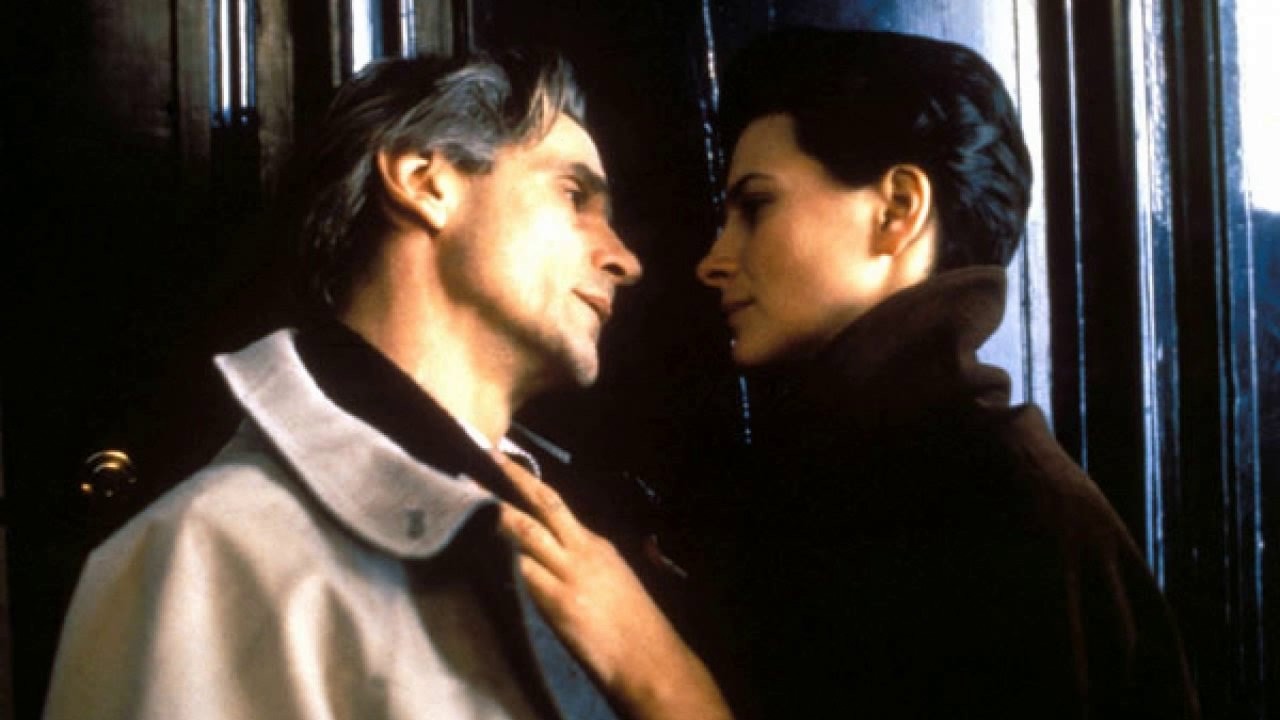
Dr. Stephen Fleming (Jeremy Irons) is at a reception when his gaze crosses paths with that of Anna Barton’s (Juliette Binoche), and immediately there is no questioning that they have fallen for each other. How unfortunate that theirs is a romance that is forbidden: Stephen is not only a member of Parliament with the eyes of the UK weighing down upon him, but also a family man with a wife and two children – even more complicated that Anna is the fiancée of Stephen’s son. In spite of these circumstances, they just can’t resist consummation, even knowing the impact their affair will have. Like a train crash, we the audience can only watch in dreaded captivation.

I’m going to get my own personal elephant in the room out of the way, first: I’ve never been sure about Jeremy Irons as an actor. Once you see Dungeons & Dragons, you’ll never lay eyes on him ever again without the slightest chuckle. I will say that here, in Damage (where he looks like a cross between Pierce Brosnan and Phantom Thread-era Daniel Day-Lewis), he is plenty reserved and knows to keep himself in check. That said, while his acting is fine, he doesn’t really add much. As for Juliette Binoche, well, she’s amazing as always, but I’m also in mad love with her, so take my remarks with a grain of salt.

In spite of the fascinating subject matter, Damage still kind of feels like it just dwells from scene to scene, occasionally stopping for reserved yet very titillating sex between Irons and Binoche, and the final act becomes almost laughably melodramatic. What the film may have lacked in plot progression, it made up big time in implication and insinuation. Damage masterfully implies vulnerability and impending disaster throughout. It is always very subtle and never once forced (thanks primarily to the brilliant mise-en-scene). I was also quite taken by the film’s score, and it all made sense when I saw the name: Zbigniew Preisner, the same man responsible for the masterful scores for various works of Krzysztof Kieslowski. I didn’t realize until the film had ended that it was directed by the notable Louis Malle, so I leave you with this: there are definitely techniques worth taking notes from in Damage, and the overall film is good enough to warrant a watch, but is probably best left for Malle completionists.


Graduation (2016)

Directed by Cristian Mungiu

* * * 1/2

Romeo Aldea’s (Adrian Titieni) daughter, Eliza (Maria Dragus), is on the threshold of a better life for herself – a scholarship to study psychology in a prestigious school in England, on condition that she aces her final exams. When the film opens, with Eliza’s test day quickly approaching, Romeo is dropping his daughter off at school. Later that day, he will find out that Eliza was assaulted in an attempted rape. Though she evaded the attacker, she is left with an arm in a cast and traumatized. Romeo is deeply worried about Eliza, not just because of her ordeal, but because she is so shaken by the incident that it will most likely affect her performance on her exams, obliterating any chance of her escaping the dreary existence in contemporary Romania, and Romeo does everything he can to keep her on the right path, sometimes engaging in illegal activity with underhand deals and favors.

Written and directed by Cristian Mungiu, the same man behind the Palme d’Or winning 4 Months, 3 Weeks, and 2 Days, Graduation continues his trend of exhibiting ordinary and unsuspecting people in extraordinary circumstances in post-Communist Romania. No exaggeration: right from the start, Graduation exhibits a slow-burn tension that remains throughout the entire movie, from the broken window that starts the film to watching a string of impending trouble unspool for Romeo’s noble yet nonetheless illegal activities – my heart dropped when Romeo is confronted by investigators at one point in the film.

As tense as Graduation is, it is also just as thought-provoking on the struggles of being a parent. All this man wants is the best for his daughter…or perhaps it is something deeper and more selfish? Has his life become so meaningless that the only chance of noteworthy accomplishment are those of his daughter? Not exactly unfamiliar territory as far as narrative is concerned, but Graduation presents it in such a naturalistic yet striking manner. Though the film’s final scene feels rushed and anticlimactic, and the overall visual style leaves too much to be desired (favoring hand-held voyeurism over its own unique visual style), Graduation is riveting and tense domestic drama not worth missing.


Toni Erdmann (2016)

Directed by Maren Ade

* * * 1/2

Divorced, and with his loneliness further rendered by the passing of his dog, the jovial and joke-loving Winfried (Peter Simonischek) sets out for quality time with his well-intentioned yet high-strung workaholic daughter, Ines (Sandra Huller). Though he does get to spend some time with her, she is all-too consumed by her work complete with phone calls on repeat and outings cancelled due to pressing work matters. Winfried and his love of practical jokes doesn’t do much to help the situation, but instead of cleaning up his act, Winfried goes all the way with practical joking when he adopts the alter ego of Toni Erdmann, a life coach. Ines protests her father’s antics, but Toni has no idea what this woman’s talking about, as he is in no way related to her. Whether out of fear of her reputation being compromised or out of curiosity to see how far this will go, Ines plays along.

I’d been wanting to see Toni Erdmann ever since hearing of its premise, as I not only love father-daughter dynamics, but also comedy that is rooted in deep-human tragedy. The Oscar nomination also further piqued my curiosity, but the 2.5 hour-plus runtime has made me postpone it time and time again. A lazy Sunday finally provided me the opportunity, and I must say that my first remark is on the runtime: in spite of it, Toni Erdmann is exceptionally well-paced and never once feels like its actual runtime. It helps that one can’t help but watch the scenario and just wonder where the hell it’s going to go.

But the true driving force is in the characters of Ines and Winfried, as they are such strong personalities that you can’t help but watch them in fascination of their contrast, and the film’s overall handling of the complex father-daughter dynamic is done wonderfully – both characters may irritate you from time to time, but you still really care about both of them. Though the tail-end of the second act kind of goes nowhere, and the entire third act feels fairly stagnant with no satisfying kind of rectification (though Ines’s birthday party is a movie moment I won’t be forgetting anytime soon). All that said, seeing that embrace between Ines and Winfried (donning a kukeri costume) brought a huge smile to my face. Overall, maybe not perfect enough to justify its length, but I won't be forgetting Toni Erdmann anytime soon.

Monday, May 21, 2018

THE WEEKLY RECAP: May 14-20


Betty Blue (1986)

Directed by Jean-Jacques Beineix

* * ½

When we first meet Zorg (Jean-Hugues Anglade), a handyman working various jobs on a beach, he has known Betty (Beatrice Dalle) for only a week, and they are already in the midst of an intimate and passionate love affair (they make love every evening). Betty is especially in love with Zorg, to the point of mania – she completely trashes Zorg’s bungalow in her frustrations when he tolerates his boss’s alleged outrageous demands. It is here that she discovers Zorg’s gift for writing. They abandon the bungalow and the beach (in a rather heated fashion) and set out to see what life will bring to their intense love for each other. However, things only become more complicated as Betty’s manic episodes become more frequent, steadily heading toward the path of complete madness.

Most every scene that involved Betty and Zorg were the best moments of the film, as the intimacy between them was truly something special. That combined with a frank depiction of nudity and sex made for a beautifully erotic bond that was a joy to behold. The overall portrayal of the madness of passion was also riveting to watch, not just the passion for each other but the passion for expression as well (an IMDb user pondered that everything going on was in Zorg’s mind in development of a literary work, and it kind of makes sense). I would also like to point out the really interesting color palette, which had this zany vibrancy to it, just like the character of Betty. Oh, and it should go without saying that Beatrice Dalle is absolutely fantastic.

All that said, I wasn’t completely invested in the film: Betty Blue was initially released in a two-hour runtime, but a 2009 director’s cut added an entire extra hour of material. I watched the latter, as I tend to prefer the longer cuts of films, but here is a case where I would like to see the shorter theatrical cut before giving a confident opinion on the film. This director’s cut really seemed to just kind of dwell at times, and I found myself growing disinterested during fragments of the film, as there were countless moments that added nothing to the fascinating chemistry between Zorg and Betty. I will eventually get around to the theatrical cut – we’ll see what I have to say by then.


The Passenger (1975)

Directed by Michelangelo Antonioni

* * ½

While wandering the arid Sahara Desert shooting a documentary, David Locke (Jack Nicholson) stumbles across the corpse of Englishman and acquaintance Robertson (Charles Mulvehill). Exhausted and burnt out with his own life, with Robertson’s identification papers in front of him ready for tampering, Locke switches identities with Robertson. A new identity, a fresh start, but life seems to continue on with the same disillusion and drab inertia that Locke so experienced in his previous life. Things become even more complicated when he discovers that he has filled the shoes of an arms dealer.

Roger Ebert once said of Antonioni (possibly my favorite filmmaker), in perhaps the finest description of his work: “There is an emptiness in the films of Michelangelo Antonioni that the director seems to love more than the people who intrude upon it.” This is not a condescension, as Antonioni’s most common themes include existential alienation. The Passenger is no exception to this practice, but I must exist that I wasn’t too compelled by this one. Granted, Antonioni is one of those filmmakers that you really need to be in the right mood for (L’avventura was a slog my first time – second time, it was a masterpiece), but The Passenger just wasn’t too interesting.

On a visual level, Antonioni’s films are always something to look forward to, but in The Passenger, the cinematography was quite dull (then again, the desert isn’t much to look at), though I must admit that some of the technical trickery was quite remarkable – keep a lookout for an incredible transition to a flashback early in the movie. I can fully admit that most my criticisms could very potentially wane with a second watch, as there was some poignancy here and there, but what gets zero excuse is the horrendous dialogue, which is often awkward as hell, clunky, jumps straight to the point in an overly-obscure manner. The Passenger isn’t necessarily a terrible movie, but it was certainly a let down from one of the finest filmmakers who ever lived.


Trouble Every Day (2001)

Directed by Claire Denis

*

The Browns are a newly married couple who travel to Paris for their honeymoon. Almost immediately upon arrival, Shane Brown (Vincent Gallo) is desperately trying to get in touch with Leo (Alex Descas), a general practitioner, who has inexplicably up and left – we actually see Leo in the film’s opening moments, as he was assisting a mysteriously sinister woman (Beatrice Dalle) in burying bodies, followed by locking her up in a home (she is eventually broken out). At the center of everything is slow-burn unease and implications of romantic and sexual turmoil.

Or at least that was what I was able to gather from what I saw. I actually had to refer to Wikipedia and IMDb for some assistance, but that won’t matter much, because I absolutely hated this movie. Some might dismiss my vitriol simply because “I didn’t get it”. I assure you that I don’t care whether I “get it” or not (remember that Eraserhead is one of my all-time favorites). All I care about is whether I’m compelled at all or not, and Trouble Every Day crash-landed as far as trying to engage me, with its empty yet ironically and messy narrative, which I can’t help but feel is intentional (lost points for pretension). There’s no interesting cinematography. No interesting music. No interesting characters. Not even the always-striking screen presences of Vincent Gallo, Alex Descas, and Beatrice Dalle could make this worth watching.

That said, there are two moments of poignancy, in all of their grotesqueness (if you’ve seen the film, you know exactly what scenes I’m talking about). While these brutal scenes don’t feel exploitive, they’re still not worth it, even for a film that runs at only 101 minutes (it felt like an insufferable eternity). Invest the time (and more) in a better film on sex and relationships, like Last Tango in Paris. Trouble Every Day is my first experience with Claire Denis, a world-renowned filmmaker, and this is often said unlike anything else she’s ever done. I can only hope going through her filmography will only go uphill from here, because this film just plain sucked. Honestly, the more I think about it, this is one of the worst movies I’ve ever seen.

Friday, May 18, 2018

FILM REVIEW: Deadpool 2 (2018)


Directed by David Leitch

* * *

Just going to get the elephant out of the way first: I never got around to 2016’s Deadpool. No contemptuous aversion or anything; just didn’t feel too much reason to see it. If you know me (and I believe I’ve stated this before on Red Eye), you know that comic books just aren’t my thing. Subsequently, I don’t keep up with every Marvel or DC film that comes out. Now, that said, there just might be a Deadpool fan waiting to burst out of me, as I can at least say that I do have some familiarity with the character, as he was my hero of choice in the Marvel: Ultimate Alliance video game. After seeing Deadpool 2, that inner fan is a few steps closer to bursting out.

My lack of familiarity with the first Deadpool film may be a detriment to this review’s credibility; perhaps it follows an identical formula. Perhaps it uses the same tropes and jokes. I don’t know, but what I do know is that, even as somebody who’s completely clueless as to the context of what’s going on, Deadpool 2 is great fun regardless.

So, Ryan Reynolds is back as everybody’s favorite disfigured, hyper-violent, wise-cracking mutant mercenary, and Deadpool 2 opens with one hell of a bang – literally, as we see Deadpool laying atop a pile of combustible drums and blowing himself to smithereens. Rewind: through his 4th Wall-breaking narration and a few typical Deadpool-esque hijinks, he returns home to his fiancée Vanessa (Morena Baccarin). They are ecstatically discussing bearing children when a team of hired goons storm in, and the result is Deadpool’s fiancée murdered. And here is why he blows himself up.

But we’ve still got a whole movie ahead of us. Deadpool’s remains are collected and reassembled by X-Men’s Colossus (Stefan Kapicic), and extends Deadpool an invitation to join the X-Men. He accepts, and his first assignment involves dismantling a situation involving Russell (Julian Dennison), a hot-tempered mutant child who brings the phrase “hot-tempered” to its truest sense. One mishap leads to another, and Deadpool and Russell find themselves in a mutant-exclusive prison (where everyone dresses like DEVO). On the other side of the spectrum involves Cable (Josh Brolin), a mysterious cybernetic soldier from the future who has a score to settle with Russell.

And from then on, it’s a bloody barrage of foul language and mercilessly brutal violence, the extremity of which I was rather taken aback by. Rest assured, though, that I don’t criticize the movie for its vulgarity, as I was having a manically good time start to finish. Of course, all of the humor that Deadpool is so famous for is present: frequent obliteration of the 4th Wall, snarky sarcasm, references to pop culture and other Marvel characters and stories.

Though there are some jokes that will be outdated in time, the writing never once felt forced or overbearing, something I was very surprised by. Commonly, films that are aware of themselves in a way like Deadpool 2 is, it’s very easy to try too hard, but Deadpool 2 walks the line absolutely flawlessly. Then again, this was probably helped in part by Ryan Reynolds and his perfect comic timing – I could not think of a better man to portray Deadpool than Reynolds (and I’m pretty sure there’s many an audience that couldn’t agree more).

As for the action itself; yes, it’s about what you’d expect from a Marvel movie, but they’re still a ton of fun, though I must say that the sound design is superb. Then again, the action sequences are rarely driven by the action itself, but the jokes that are carried into them. The well-written humor synchronizes very well with the awesome action sequences. Take, for instance, a sequence later in the film when Deadpool forms his own X-Men-like team of amazing fellow supermutants. This team is going to kick some serious ass, but then they go on their first mission, and let’s just say things don’t go too well (this was probably my favorite scene in the entire film), but the entertainment doesn’t cease there, as watching the mission-gone-horribly-wrong still carry on is still very exciting.

Yes, I do have a few gripes with the movie. There was one joke that was a little too awkward for me (involving Deadpool…regrowing legs, for lack of a better way to put it), but my bigger criticisms come from a couple of the characters. First, there’s Russell. It’s not that he isn’t a well-written character, and perhaps I was just having too much fun with Deadpool, but every scene he’s involved in just drag the pacing down something fierce. The character himself I just feel is too secondary to be given so much spotlight.

The other major issue is Cable, who isn’t so much a problem as much as a major missed opportunity. Cable comes from a war-torn future bearing great resemblance to that of The Terminator’s, and here is a man who is a product from such a world: the result is a no-nonsense, raspy shadow of a man. He eventually finds himself having to work with Deadpool, who can’t take anything seriously. It is such a fascinating dynamic that not only isn’t explored, but is introduced much too late into the movie (perhaps I’ll just have to wait for the next Deadpool movie).

But I don’t let any of this take away that I had lots of fun with this movie, and I can’t begin to extol how wonderful it is to see a film like Deadpool come around and relentlessly make fun of the comic-movie formula (in a time when it’s so bloated). Granted, this is praise that the first film deserves more than this sequel, but it’s still nice to see the tradition carried along, and I hope Deadpool is a franchise that is here to stay.

Oh, and do make sure to stay for the hilarious and wonderful after-credits scene.


Monday, May 14, 2018

THE WEEKLY RECAP: May 7-13


Adaptation (2002)

Directed by Spike Jonze

* * * *

How does one write a movie script adapted from a book that contains no substantial material for a feature film, like, say, a book about orchid flowers? Such is the task that Charlie (Nicholas Cage) is faced with. With bold artistic ambition, though, Charlie refuses to give up on the project. Difficult already, but said difficulty is multiplied when mixed with his neuroses, self-loathing, sexual hang-ups, and not to mention rooming with his twin brother Donald (also Cage), who is also writing a screenplay – one that is much more contrived and formulaic than Charlie’s vision, but Donald finds great praise and success with his ambition. All that follows is a

Though directed by Spike Jonze, the real hero here is screenwriter Charlie Kaufman, who would later pen Eternal Sunshine of the Spotless Mind and Synecdoche, New York (the latter of which he also directed). Kaufman is truly one of the most singularly unique voices in screenwriting – I always recognize something by Kaufman’s writing before whoever is directing. Adaptation, though not his crowning achievement, certainly has one of the most cleverly written scripts in modern films, not only in the outrageous collage of themes and styles within, but just how flawlessly it handles it all – it is also the single most unique adaptation of a book ever, as far as I’m concerned (yes, this is credited as an adaptation of The Orchid Thief).

I can talk about Kaufman’s brilliance all day, but Jonze’s direction is also noteworthy. Like with Being John Malkovich, their previous collaboration, Jonze brings Kaufman’s truly unique vision to life with such perfection and confidence. Particularly impressive, for me, was just how subtle Adaptation was in its visual tricks; i.e., the way having two Nicholas Cages on screen at the same time – it wasn’t so much the trickery that grabbed me so much, but rather I was so involved with the film on every level that I didn’t even notice that there are two Cages on screen! It just goes to show that Adaptation is a riveting, unique, and great film.


Mother and Son (1997)

Directed by Aleksandr Sokurov

* * ½

The countryside extols a most beautiful day – beautiful enough that the ailing Mother (Gudrun Geyer) and her grown Son (Aleksei Ananishnov) make their entire day enjoying the day’s beauty, strolling about, relaxing under the leaves.  On rare occasions, they exchange dialogue every once in a while, but to talk too much would disrupt the ambience of the day – for them, anyway. To be more fair to the film, I wish I could be a bit more descript as far as Mother and Son’s plot goes, but that’s about all there is to it.

Does that make it bad? Not necessarily. Mother and Son is about as much of an art film as one might expect, and that’s how one should regard it. As typical with artful movies, there’s more moments of ambience and meditation than plot and dialogue, and it’s quite absorbing, with trees and bushes always in the foreground and the soundtrack comprised almost exclusively of leaves rustling (I feel like Apichatpong Weerasethakul may have taken some notes from this film). In the case of Mother and Son, it is sometimes quite poignant. Considering the scenario that was brought before me – that of a grown man caring for his ailing mother – there were times when I was completely lost in thought, sometimes wondering which of the two has the biggest burden as far as the mother-son relationship goes. Additionally, there’s the cinematography, and here is a case where literally every single frame is a painting. Seriously; one could take choice stills, make blowups, and put them in an art gallery. I was frequently reminded of Andrew Wyeth’s famous painting Christina’s World.

Ultimately, though, I can’t exactly say I enjoyed Mother and Son, as there is too much of a focus on being meditative. Even then, though, it’s not necessarily pretentious, as one might think – not to mention that it in no way overstays its welcome (the DVD from Kino clocks in at just under 70 minutes). I tend to think of films like this as demos, of sorts, of the artistry and poignancy that a particular filmmaker is capable of, and Mother and Son certainly exhibits many potential strengths from director Sokurov. That said, those strengths aren’t on full display, still leaving Mother and Son as a demo.


The Umbrellas of Cherbourg (1964)

Directed by Jacques Demy

* * * ½

It is 1957 in the coastal town of Cherbourg. Genevieve (Catherine Deneuve) and Guy (Nino Castelnuovo) are deeply in love, and seemingly nothing can separate them. Unfortunately, separation is exactly what happens, as Guy is called to duty to do his part in the Algerian War. Left on her own, with no one to love or show affection to, Genevieve exists in a perpetual state of sadness and longing, and her feelings become all the more complicated when her mother presents her with a prospective partner.

The Umbrellas of Cherbourg just might be the most adorable movie I’ve ever seen. Of course, the cuteness has a lot to do with all of its French glitz and charm, as well as its colorful spectacle (courtesy of Technicolor), but what truly makes this movie so special is because of one simple thing: the film is a musical, front to back. When I emphasize front to back, by this I mean that every single line of spoken dialogue is delivered through singing (with a score to back it up, of course). For many, especially non-fans of musicals, this might be about the most off-putting thing ever, but I can assure you that you settle into it right away, and it is simply enchanting from start to finish.

I enjoyed this movie so much, and I don’t have too much bad to say about it. In fact, I don’t, but there are some missed opportunities that glare just a bit too brightly. Considering just how wonderful the style of the film is, and while the material presented gets the job done, I feel like everything as far as themes and characters could have gone a lot further. Additionally, I feel like a bit more technical work would have been nice, as the film sometimes feels quite bland on a technical level. But these are fairly minor gripes that could wane with another watch, and another watch is exactly what I plan on doing, because The Umbrellas of Cherbourg is pure magic.

Monday, May 7, 2018

THE WEEKLY RECAP: April 30 - May 6


Jules and Jim (1962)

Directed by Francois Truffaut

* * * *

They first met in 1912, a shy Austrian with little luck with the ladies and an extroverted Frenchman with plenty of luck with the opposite sex – Jules and Jim, respectively (Oskar Werner and Henri Serre). The match of friendship strikes, and we follow them through their escapades and their various interactions with women, eventually crossing paths with Catherine (Jeanne Moreau), who becomes Jules’s wife. Unfortunately, the Great War explodes throughout Europe, and Jules and Jim are called to duty – on opposing fronts, no less. Thankfully, they make it out of the war alive and eventually reunited, but their friendship reaches unsteady ground when it becomes clear that Jules and Catherine’s marriage is quickly dissolving.

The French New Wave, as much as I respect it for its countless contributions, has never been one of my favorite periods of cinema. Many of the techniques that were so progressive and advanced at the time now come off as outdated, forced, and sometimes pretentious – this is why I always had a difficult time getting into Jean-Luc Godard (yeah, I said it. Crucify me). I walked into Jules and Jim not really sure if I was looking forward to it, but when I was finished, I knew I had just seen one of the greatest films of all time. Yes, it was progressive in the traditional French New Wave style, but it still holds up exceptionally well. At times, I forgot I was watching something from 1962. The way it was shot, the editing, the pacing, everything about this movie on a technical level was absolutely perfect.

But what is a great film without substance? Well, I’ve already addressed that Jules and Jim is, indeed, a great film, so the presence (and quality) of substance goes without saying. I don’t want to spoil the drama that unfolds in the second half, but it really forces the viewer to confront whether they really want what they think they so deeply desire – love being said object of desire here. It’s not particularly pleasant to think about (or watch, for that matter), but Jules and Jim nonetheless truly blew me away. It’s often considered quintessential cinema – there’s a reason for that.


The Last Dragon (1985)

Directed by Michael Schultz

* * *

Taimak is Leroy Green, a starry-eyed trainee in martial arts who dreams of becoming like his idol Bruce Lee (Leroy’s nickname is “Bruce Leroy”). As traditional with martial arts movies, Leroy’s trainer explains that to achieve the next level will be evident by exhibiting a phenomenon known as “The Glow” (it is exactly what it sounds like), and to achieve the next level must be discovered by Leroy on his own. So, he sets out on his journey to achieve the next level through Harlem, which is complete with slimy gangsters, a beautiful TV host, and a rival martial arts expert known only as Sho’Nuff (Julius J. Carry III), who vows to defeat Leroy.

The Last Dragon is what happens when fans of Bruce Lee, Motown, Synthpop/New Wave, and cocaine are put in charge of making a movie. As far as all of the different styles, cultures, and themes thrown together all at once, this is one of the most outrageous movies I’ve ever seen, but I will be damned if I didn’t have a bloody-good time. The Last Dragon is always aware of just how ridiculous it is, goes with the flow, and the result is pure schlocky fun. There’s an energy present where everybody involved was having a great time, and the audience can’t help but contract that energy – Carry as Sho’Nuff is the embodiment of what makes The Last Dragon so much fun. The soundtrack, in all of its ‘80s cheesiness, really spices things up – best of luck getting “The Glow” stuck out of your head.

If I do have any legitimate complaints, it is regarding the side plot involving a gangster and his aspiring-popstar-girlfriend. I don’t know what it is, but every scene involving them drags the movie down something fierce, but I must say that sitting through their antics is worth it for not only a terrific climactic showdown, but Faith Price’s wonderfully terrible “Dirty Books” music video. But I digress: in all of its shameless schlock, all The Last Dragon wants is to have jolly-good fun, and I can’t fault it for that, especially since I had fun myself.


Quadrophenia (1979)


Directed by Franc Roddam

* * * ½

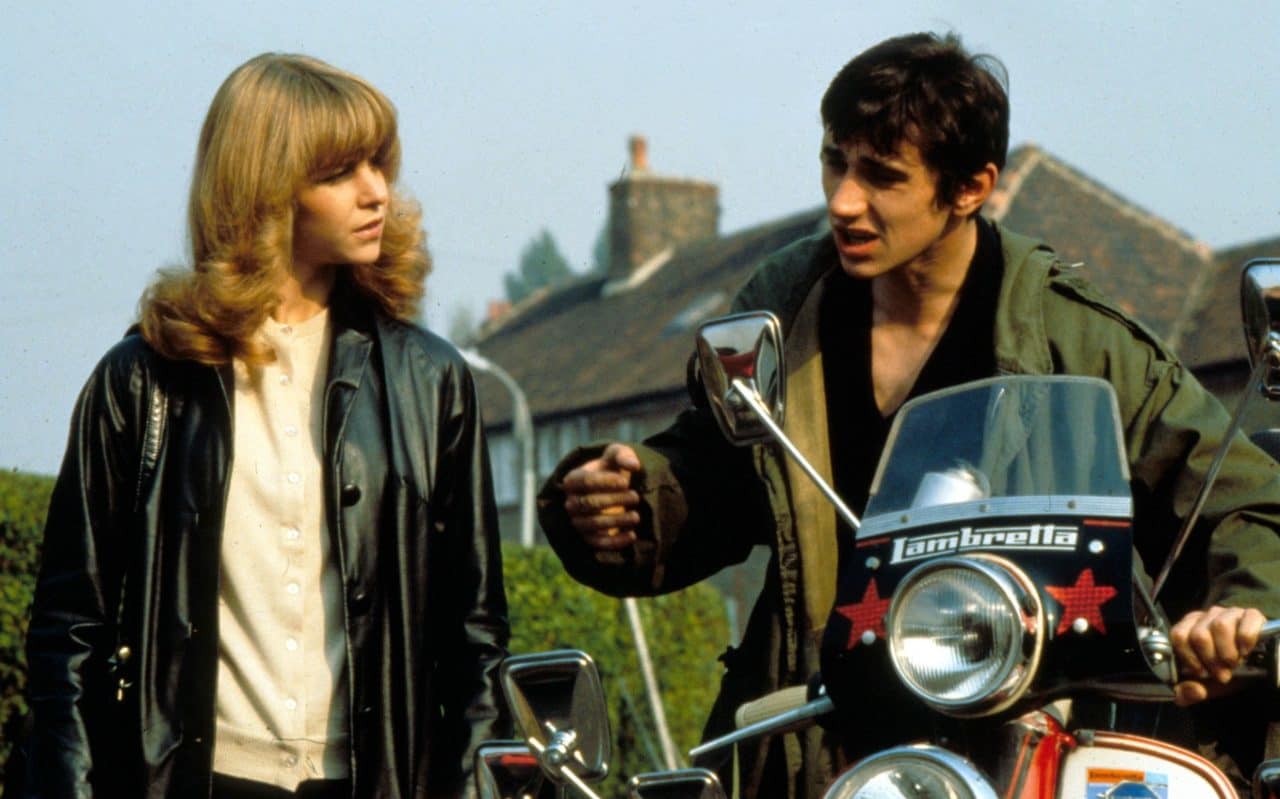
An adaptation (of sorts) of The Who’s seminal rock opera, Quadrophenia tells the story of Jimmy (Phil Daniels), a young Mod who kills time in 1964 London by riding his scooter at night, popping Blues, causing a ruckus with his lads, clashing with the rival Rockers on occasion, or finding solace from his dreary life in rock and roll records. It doesn’t take long before he finds his life spiraling out of control. Is he mentally ill? A product of a bigger problem? Or just another punk kid?

The Who have never been one of my favorite rock groups, but I can say that I do think Quadrophenia is an exceptional record, and I’ve always found the idea of adapting an album into a narrative feature film a compelling concept (if you know me, you know that Pink Floyd: The Wall is one of my all-time favorite movies).  I must say that even as a non-fan, I really enjoyed this film adaptation of Quadrophenia. Before anything else, even taking priority as a rock film, Quadrophenia is simply a British kitchen-sink depiction of directionless and disenfranchised youth – a terrific one, at that (and a particularly claustrophobic one). The weight of this film rests on the shoulders of leading lad Phil Daniels, and he absolutely nails it (why haven’t I seen him in anything else?).

Because Quadrophenia is so concerned with the real-life drama that it centers on, of all people that I’m not sure to recommend this film to, it is actually fans of The Who. Sure, the film’s soundtrack is comprised almost entirely of The Who, but most of the time it is simply background music, and the story is told like a traditional narrative (unlike The Wall, which is told exclusively by Pink Floyd’s music). I also feel that the final third of the film feels quite rushed, but that is a criticism that might wane with subsequent viewings. Otherwise, Quadrophenia is one of the most riveting kitchen sink dramas and coming-of-age films I’ve seen, which really took me by surprise.

ADDED TO 'GREATEST FAVORITES': Akira (1988)

Directed by Katsuhiro Otomo “Neo Tokyo is about to explode.” So boasts the famous tagline for Akira , and it couldn’t be more ...