Saturday, February 17, 2018

FILM REVIEW: Early Man (2018)

Directed by Nick Park

* * *

I could have walked out of the first ten minutes of Early Man and I would have been convinced I saw one of the best animated features of 2018 (I’m aware it’s only February).

There are no words. Literally (just a few Cro-Magnon grunts). It opens in the desolate badlands of a B.C. Earth, where humanity scurries at the feet of the dominant dinosaurs. Then, the meteor strikes. The dinosaurs are wiped out to extinction, but man is okay. They come out of their hovels and wander about when one of them comes across a uniquely patterned red-hot rock (it almost looks like a 20-sided die owned by Satan). One of the Neanderthals picks it up, realizes his hands are baking, then hurls it toward one of the others – they react the same way, soon realizing its wiser to kick it around instead of pick it back up. This charmingly transitions from slapstick to sport – this is perhaps the first game of soccer (football for any English readers) ever played.

Save for the trailer, I had little idea that this was going to be a sports movie of sorts, but this opening was so fun I was welcome to anything at this point.

Fast forward a few generations, where we follow the misadventures of caveman Dug (Eddie Redmayne). He belongs to a tribe of fellow cavemen headed by Chief Bobnar (Timothy Spall). They “specialize” in hunting rabbits, but Dug strives for a bit more in life, but otherwise has a comfortable and peaceful life in the Valley.

Until the Bronze Age, that is.

Beyond the Valley, the Bronze Age has settled into the world quite nicely, but the riches of their industrious innovation just isn’t enough for Lord North (Tom Hiddleston). Bronze means money, and he needs more of it. The result: his forces roll into the Valley and drive our underdog cavemen out into the unforgiving wilderness of the badlands. Though the rest of the tribe are unhappily content in their involuntarily exile, Dug is furious and wants his home back. Long story short, he gets his chance when he discovers the game of football, which is the sport of choice in Bronze territory.

What follows is a story of underdogs rising above in spite of the odds towering against them, and this is Early Man’s weakest element. As far as the plot itself goes, it is exactly what you’d expect and everything wraps up how you’d expect. I have no problem with a vanilla-sounding story; it all depends on what is done with the material. Unfortunately, Early Man doesn’t really do anything unique with the plot, and the resulting predictability leaves too much to be desired.

That said, what Early Man lacks in story it makes up for in comedy. As you could imagine with this material, there’s plenty of slapstick to go around – the audience seemed to really enjoy a scene where a character falls down multiple sets of stadium seats. While there’s nothing particularly genius, there is some clever comedy gold here and there (a recurring joke with a messenger bird made me lose it). There’s also a hilarious scene involving Dug’s trusty warthog and Lord North taking a bath.

As for the characters…one of the central themes of Early Man is that of coming together in tough situations, but that feeling is never terribly prevalent within the tribe of our heroes. I think this because a lack of fully developed characters. Granted, they do have different personalities that set them apart from each other, but nothing strong enough to make them memorable characters. With the exception of two. I rather enjoyed Goona (Maisie Williams), a girl of the Bronze community who wishes for her big moment on the football field (and may or may not be a skilled player). Lord North is one of those silly villains that we love to hate – he just may be the best part of the movie.
In spite of the inconsistency of character quality, all of the voice actors were wonderful (Hiddleston especially), and their enjoyment for the project proves contagious as it washes over onto the audience.

I could almost say that Early Man has some of Aardman’s best animation to date, but that’s a statement that would require more than just a grain of salt. It’s been a minute since I’ve seen a film from Aardman Animations – as a matter of fact, I think the last one I saw of theirs was Chicken Run back in 2000, as well as bits and pieces of Wallace and Gromit over the years.

Regardless, though, Early Man is an exemplary achievement in stop-motion animation. Not only are the worlds imagined to every single detail, but there is always something going on, whether it be leaves rustling or a butterfly idling. Double impressive that all of these miniscule details are still present even when the action kicks up to the point where we’d never pay attention to the background. Remember: it’s the little details that cultivate into the big picture.


There is an inimitable appeal to the works of Aardman Animations that always make for an enjoyable experience no matter what. Early Man is no exception to this standard, but the all-too predictable story prevents me from giving it glowing recommendation. Nonetheless, it is still fun and good-spirited enough that I can assure you that there is at least some enjoyment to be had.

Friday, February 16, 2018

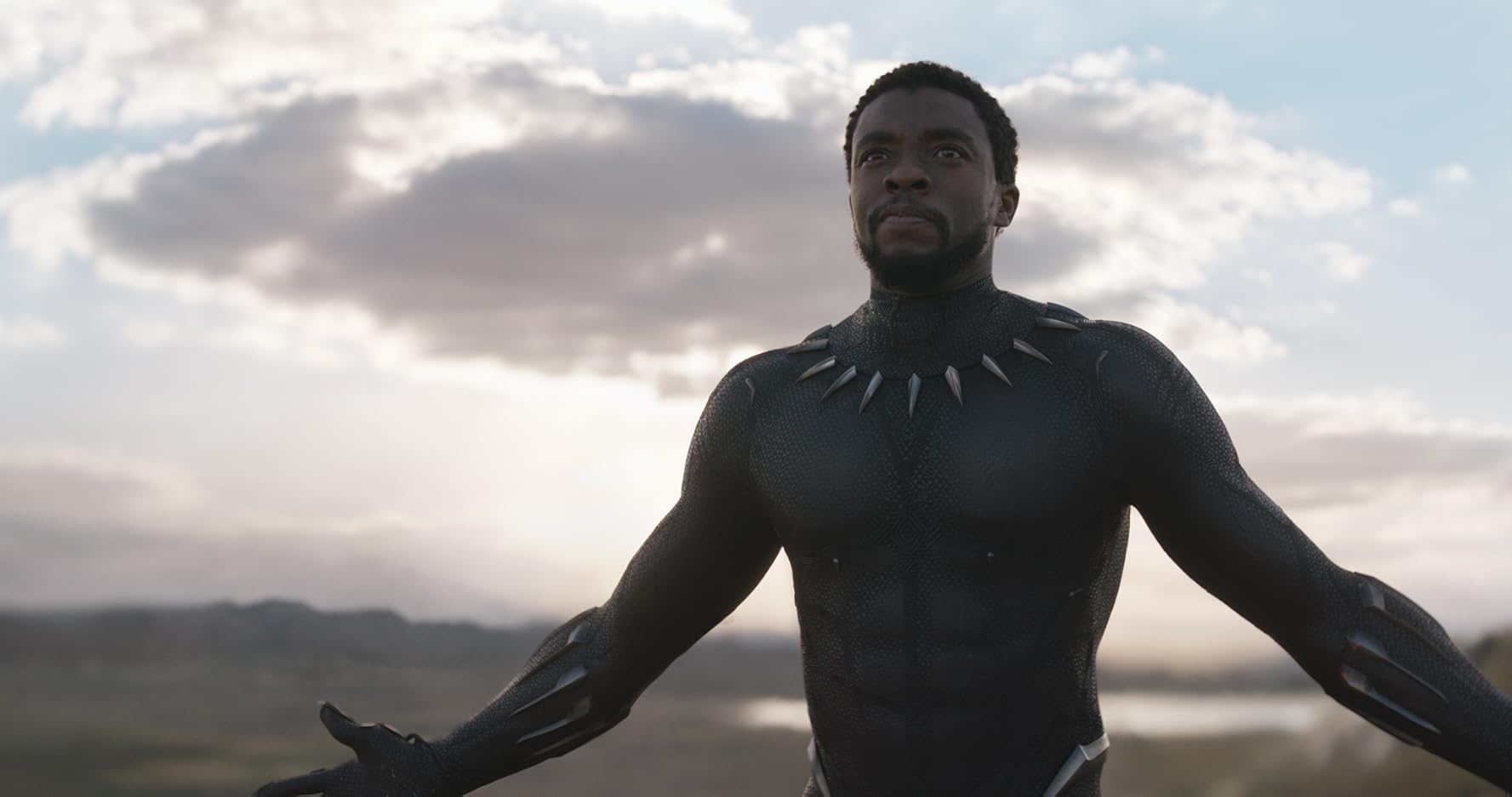
FILM REVIEW: Black Panther (2018)

Directed by Ryan Coogler

* * *

It’s crazy to think that almost 10 years ago, all of us walked out of the theater completely blown away by Iron Man, the first entry into the wide-spread Marvel Cinematic Universe. While I’ve never been a comic book enthusiast, I look back on the first couple of years of MCU with great fondness: when the next Marvel film was released, it was an event, and to think about how all of these films will cultivate was exciting. Now, it’s 2018.  While I have no doubt that comic book fans eagerly await the next entry into the MCU, I sometimes get the feeling that the MCU ran its course years ago, and that the only reason for a casual movie goer to see a Marvel movie is because there’s nothing else to see.

To me, part of the reason the MCU became stale is because of the lack of identity they seem to possess. They began to look, sound, and feel practically identical after a while (to me, anyway). Many of them seem as if they used pre-rendered modern-yet-futuristic backgrounds with different characters in the foreground.

But now we have Black Panther, and while it is not totally liberated from some of these Marvel “signatures”, it does spruce it up with a few additional ingredients that results in an identity all its own. Everything in Black Panther, from the music to the costumes, is heavily enrooted in both modern and traditional African culture. Not once, however, does the film pander or become overbearing. It’s a sincerely welcome change of scenery for the Marvel universe.

Our hero, the titular Black Panther, is T’Challa (Chadwick Boseman). He is the son of T’Chaka (John Kani), the King of their homeland Wakanda. T’Chaka has been killed in an explosion, thus enthroning T’Challa as the new King. He is indifferent and uncertain about his position. Things become more complicated when he fails to bring Klaue, a long time enemy of Wakanda, back for justice – this brings ire out of W’Kabi (Daniel Kaluuya), who lost his family to Klaue.

Klaue (Andy Serkis) is a long-time enemy of Wakanda, and he is working with Erik Killmonger (Michael B. Jordan). To say anything else about the latter would result in spoilers, so I will leave it at this: the tagline of Black Panther is “Long Live the King”, but not without struggle.

There is somewhat of a lack of distinctive personality in certain characters, most notably (and disappointingly) in T’Challa. He’s certainly not a blank slate character and there’s enough to make him three dimensional – as mentioned above, he’s somewhat insecure in his duties as king, he’s charmingly cocky at times (“I don’t freeze” – you’ll know the scene), but he’s always integral and good-spirited. So, there is a character here, but compared to the distinction of characters like Tony Stark and Thor, there’s not much there in T’Challa. It’s usually against my personal policy to criticize based on comparisons like these, but knowing what Marvel Studios is capable of, there is much to be desired.

What Black Panther may lack in character, so to speak, it makes up for ten-fold in performances. Chadwick Boseman, in spite of everything, is a great fit for T’Challa and hits all the notes the character requires. What stands out even more is the strength in the supporting cast, particularly in Letitia Wright as Shuri, T’Challa’s sister. She is a genius at engineering and creating her brother’s technology, but can’t go on without some sibling shenanigans – the result is a charming comic relief of a character. And then there’s Danai Gurira as Okoye, a royal guardian who is always by her King’s side. Excuse me for being vulgar, but talk about badass (I really hope she gets her own spinoff movie). Also worth mentioning is Daniel Kaluuya, of last year's big hit Get Out, and Black Panther is putting display great potential for a promising new actor.

As for the villains: Serkis gives Klaue a skid-row kind of energy that makes him a menacingly sleazy character, almost like he’s always coked up. I repeat that to say too much more about Jordan’s Killmonger would be spoiling the film, but the threat of his character really sneaks up on you.

The production quality and visual effects of Black Panther are about what you’d expect from a Marvel film, and there’s really not too much to comment on. However, when it comes to the action sequences, Black Panther is incredible. Contrary to the epic-scale battles that are prevalent in Marvel films, Black Panther proves that less is more: action scenes are rather small-scale and reserved, but turn out to be some of the MCU’s most memorable moments – I was particularly taken by a melee battle on the waterfall. Even in its more grand scale battles, namely the climactic final battle, the focus is still on specific sects of the battle instead of the big picture. It adds a claustrophobic tension that makes them all the more exciting.

The score is also worth giving a mention. Yes, many times it’s what you’d expect with its stock epic orchestra, but we are also given plenty of wonderful African music, from hip-hop beats to some exquisite polyrhythmic percussion, which there’s a lot of. My ears were pleased.


The overall response to Black Panther has been rather polarized. I believe that audiences are being too quick to give either unconditional praise or harsh judgement to Black Panther. I greatly admire the passion in its progressivity, and it certainly stands out in an ocean of run-of-the-mill comic book films. At the end of the day, though, strip away its key identifiers and it is nothing too spectacular in the MCU, but with its unique spin on the typical Marvel tropes, it is still an entertaining and most welcome addition to the franchise.

Sunday, February 11, 2018

FILM REVIEW: Peter Rabbit (2018)

Directed by Will Gluck

* * 1/2


The wonderful story of the mischievous Peter Rabbit and his trespasses into Mr. McGregor’s garden needs no introduction. Beatrix Potter’s book was published in the early 20th Century. Now, it is 2018, and Peter is still up to his mischief, thieving the vegetables from Mr. McGregor’s garden in the new film, simply titled Peter Rabbit, a sort of adaptation/sequel to Potter’s work. Right from the beginning, it sets the tone and style quite perfectly. It’s energetic, rambunctious, and quite charming. That said, some of its expository establishments are rather unflattering, and all of these qualities – the good and the bad – will maintain throughout the entire duration.

So, Peter Rabbit opens up with our titular rascal (voiced by James Corden) terrorizing Mr. McGregor’s garden yet again. Then enters an understandably angry Mr. McGregor (Sam Neill – wait, that was Sam Neill!?). He manages to outsmart Peter and next thing we know, Peter is in his grasp – literally. How will Peter get out of this one? Turns out, in a most unexpected way: Mr. McGregor falls over, having died of a heart attack.

Peter, his sisters, and all the rest of the animals in the neighborhood rush over to the now empty residence of McGregor, partying and pigging out on the riches in the garden. But all good things must come to end. Enter Thomas McGregor (Domhnall Gleeson), Mr. McGregor’s nephew. Thomas has inexplicably inherited his great uncle’s house (he never even knew he had a great uncle).

Thomas is the perfect kind of villain for a film like this. He’s the kind of silly antagonist that’s hard to love, but harder to hate. He is awkward and lanky, a neat-freak with OCD tendencies. He is terminated from his job at a toy company due to a tantrum after being denied a deeply-desired promotion. Reluctant to abandon the neat tidiness of London, he moves out to the countryside house. He is greeted to the shambles left by meddling animals, all of which are vermin to him.

Now it’s war, and from here Peter Rabbit becomes about what you’d expect – a series of hearty exchange of slapstick cat-and-mouse hijinks in a modern attitude to cater to a modern audience. As alarming as that may sound, it’s actually nothing to worry about too much.

Yes, there is some pandering once in a while, but the film is never desperate in its mission to appeal to everybody. At the same time, trying to appeal to everybody becomes somewhat of a problem. While Peter Rabbit never over-indulges in the cutesiness of the story to prevent alienating older audiences, it is sometimes a bit too crude for kids. One joke in particular, which occurs about ten minutes in, left my mouth agape in disbelief of the sheer inappropriateness (no children’s film should ever make a joke about shoving a carrot up a man’s bum).

If the humor’s not being inappropriate (which is very rare, in all fairness), then it’s usually being forced. Many a time, a joke (commonly Meta) will overstay its welcome and linger way longer than necessary. Luckily, they never stay to the point that the joke becomes ruined, at least for me anyway. I did have many a laugh at Peter Rabbit, most of the times at jokes that were funny while they lasted. Once in a while, though, there would be a genuinely clever moment. My favorite is when Peter and his sisters find themselves riding the back of Thomas’s pickup into a nearby small-town. The rabbits are convinced they are in London – one of them even points out Big Ben (which is actually a grandfather clock).

Of course, what is a movie like this without a little bit of romance? A rather lovely Rose Byrne is Bea, the McGregors’ neighbor. She is a painter – a bad one at the film’s admission, save for the paintings she has done of the local rabbits. She has a huge place in her heart for wildlife, which she channels into her best work. The paintings are actually the illustrations found in the original book. It may be pandering for some, but I thought it was a nice touch. She begins interacting with Thomas, and romance ensues, albeit rather awkwardly. I just couldn’t tell if there was chemistry between them or not, but that doesn’t matter too much, because here sets up plenty of wonderful comedic potential. As far as how that results, see my remarks above about the quality of comedy.

Peter Rabbit hybridizes CG animation and live action, a technique that doesn’t usually work for me as the CG is always just a little too cartoonish (part of the reason I was never too fond of Avatar). Luckily, Peter Rabbit kept me pleased, visually. It’s certainly not award-worthy animation, but it was never too cartoony nor too realistic. In spite of this, Peter Rabbit isn’t always much to look at, as there’s a lot of gray textures in the film. Perhaps the UK wasn’t the best setting.

Now here is something I never thought I’d comment on, but must. Be sure you stay for the end credits, where animations in the style of Potter’s illustrations unfold on the screen. It is so adorable and done with such love for the source material that it’s worth the price of admission alone.


While my verdict is final, I still feel split between a 2.5 and a 3 for Peter Rabbit. One can tell that everybody involved was having fun making this, and I must say that I was won over by the charming characters and rambunctious energy. But the issues glared just a bit too bright. It’s modernization of a timeless and classic story will generate plenty of detractors, but I found Peter Rabbit just enjoyable enough to be worth hopping into, but its confusion in demographics leave me wondering who will get the most enjoyment.

Saturday, February 10, 2018

FILM REVIEW: Threads (1984)

Directed by Mick Jackson

* * * 1/2

The unyielding perseverance of humanity – our greatest blessing as a species? Or perhaps the heaviest burden of all? I am unsure, and I would prefer not to speculate much more. To argue otherwise would paint me unpleasantly pessimistic. I would love to believe that no matter what hammer-blow of a tragedy strikes us next, we will get through it. That said, Mick Jackson’s Threads presents one hell of an argument otherwise. From start to finish, this is one of the most agonizing movies I’ve ever experienced.

Threads was produced by the BBC and aired on British TV in 1984, subsequently aired in the United States the following year (Ted Turner fronted his own money to ensure an uncensored, uninterrupted broadcast in the States). In spite of the tremendous impact of its time, Threads fell into somewhat of an obscurity for two and a half decades with no home video availability in the States (save for a shabby VHS tape). Over the last few years, I have taken note of a resurgence in popularity – probably due to its 30th anniversary back in 2014. Here we are now in 2018, and a brand-new 2K restoration on Blu-Ray is available for purchase, courtesy of Severin Films.

The fear of incoming war steadily intrudes into daily existence as tensions mount. TVs and radios remain exclusively tuned to the news. It is soon reported that the unthinkable occurs: two nuclear devices are detonated in the Middle East. Panic ensues. Supermarkets are flooded with customers but not enough food to go around. Citizens begin packing their belongings and head for the countryside. Those who remain in Sheffield are subjected to the eerily monotone Protect & Survive programs, a series of PSAs that detail tips for surviving a nuclear strike and its aftermath. It is some of the most unbearable slow-burn terror ever put on screen.

And then it happens. It actually happens. The bombs fall. Shrieks of terror permeate the air. A middle-age couple rush to construct a makeshift shelter. A woman wets herself upon seeing the mushroom cloud in the distance (one of the most devastating images I’ve ever seen in a movie). Eventually, 80 megatons fall on the UK, and Sheffield is obliterated. I would give anything to say that Threads ends here, but there are survivors. I’m not sure whether to follow that with ‘fortunately’ or ‘unfortunately’.

Even if one knows exactly what they’re getting into with Threads, it will not take long to forget that this is a film about nuclear annihilation. The characters are everyday working class people, and they are presented in such a way – it is almost disconcerting in just how unremarkable they are. There is no need for a compelling character-driven narrative here.

There is somewhat of a protagonist in Ruth (Karen Meagher). While Meagher is exceptional, I don’t feel much point in going too much into her story. The people who populate Threads only serve as a means of bearing witness to the various perspectives of such an unimaginable catastrophe. It doesn’t matter what kind of people will suffer – what matters is that people will suffer. Period.

Threads takes us into a world where survival is the equivalent of trudging through hell, where death is something to be eagerly awaited. When I say that this film takes us into this world, it really takes us in. It is well-known Threads was written by Barry Hines, the man responsible for writing Kes, perhaps the quintessential British realist “Kitchen Sink” drama.

The “Kitchen Sink” attitude, as well as the aesthetic, are carried over into Threads. It is shot in grainy hand-held with an urgency that leads the viewer to believe that the action on screen is actually happening. There are also a lot of moments filmed in tight close-ups and enclosed spaces. Even among the wasteland, a sense of claustrophobia perpetuates.

The film goes on and on, observing humanity’s survival up to 13 years after the attack. At this point, the population reaches minimal levels, and society has been reduced to a medieval-like existence. The generation born after the bomb are pretty much Neanderthals, lacking in any kind of emotion and communicating in caveman-like dialect. Here is a scenario so inconceivable to us, and Threads makes it completely believable.

Adding to the merciless realism of Threads is the use of input from various scientists in the field of nuclear research (one such consultant was the late Carl Sagan). The film periodically cuts to black and will display text that briefly and objectively states what is happening and what is going to happen – FALLOUT IMMINENT: FIRE-FIGHTING AND RESCUE ATTEMPTS UNLIKELY. LIKELY EPIDEMICS: CHOLERA, DYSENTERY, TYPHOID. It is actually one of the most unique and frightening techniques I’ve seen. Once in a while, a narrator throws his two cents in as well. I think a narrator is a little unnecessary, but it is not distracting.

Threads is not 100% perfect. Many a time, a scene will fade in only to fade out just seconds later, making the pacing choppy at times. Being a television production, of course the budget is limited, and there are times when the budget shows – the result is less than flattering. In particular, there are these establishing shots of a house, and I swear all we are shown is a painting with some post-production smoke added. Other than that, though, the film thrives in spite of its budget. It actually looks fantastic and convincing.

Needless to say that Threads is a product of its time, but does that make it outdated? Absolutely not. Regardless of world affairs, as long as nuclear weapons exist, Threads will remain relevant. Personally, I hope to see a world where Threads will be outdated. Until that day (if it comes), Threads should be mandatory viewing for all.

FILM REVIEW: The 15:17 to Paris (2018)

Directed by Clint Eastwood

* * *

At the core of The 15:17 to Paris is, very simply, nothing more than an inseparable bond between great friends. This is also the key to its power, as I was moved to tears by the film’s end. What is even more amazing is how 15:17 perseveres with this sense of camaraderie in spite of a first act that put this remarkable material at serious risk of ineffectiveness.

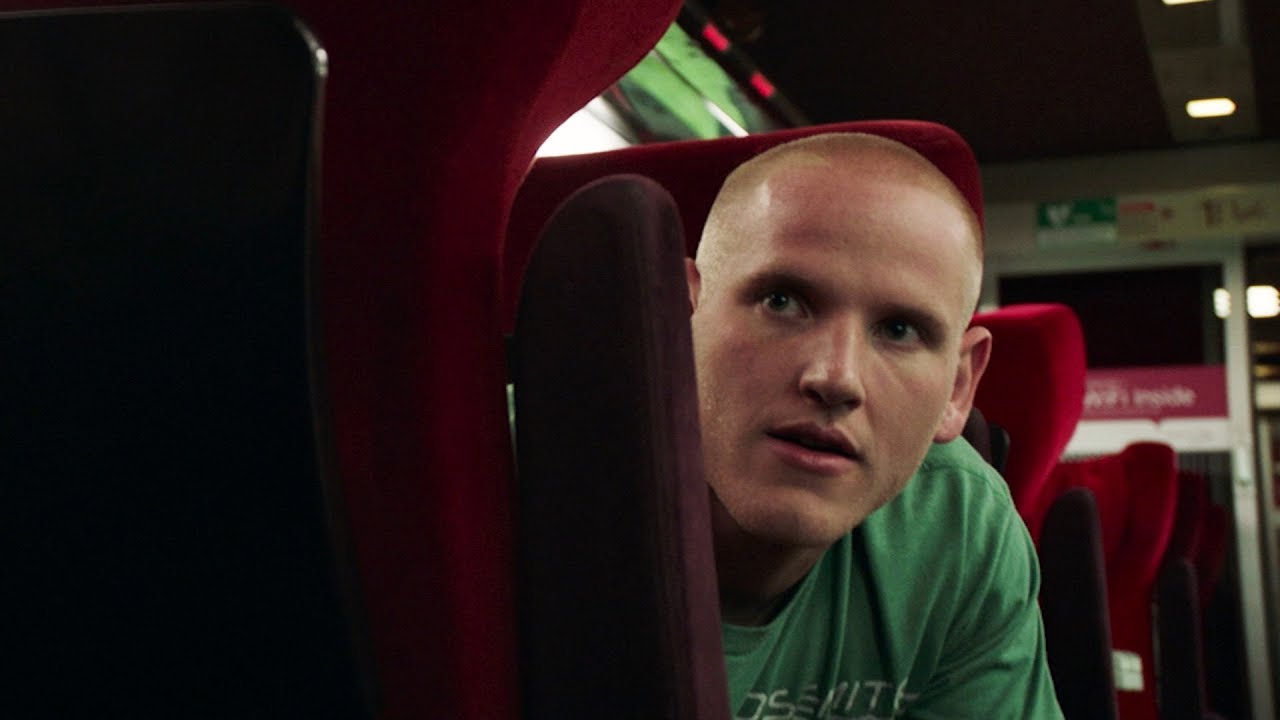
The true story about three men who heroically thwarted a terrorist attack on a Paris-bound train in 2015, 15:17 traces their nexus ten years prior. At this point, Anthony Sadler, Alek Skarlatos, and Spencer Stone are students at a Sacramento Christian school. They frequently find themselves in trouble, whether it be for being late for class, swearing, or other such signature activities of boys. It’s a very interesting cycle, now that I think about it: the very catharsis of boyhood that gets them through the day is also what continuously brings them trouble.

Eventually, they separate – Anthony strives to become more than a boy (his sights are particularly fixated on prom and the opposite sex); Alek moves to Oregon. Spencer, awkward and overweight, is saddened by this separation, now left to his own devices. He perseveres, though. When adulthood arrives, he enlists in the Air Force. He proves to be a rather troubled recruit, though. He is punished twice in the span of a few minutes when A) he is late for class and B) his assignment isn’t up to par. He takes his punishment as if nothing’s happening, and moves on.

Perseverance is a recurring theme in 15:17, which is more prevalent in the former half of the film. The theme fits considering the do-or-die nature of the climax, but 15:17 seems to be more interested in the odds of opposition. It doesn’t necessarily get off on their suffering, but we never get much of a chance to revel in their accomplishments. We watch the obstacle block their path, they spend much time conflicted on the next move, and then they make their next move. Cut to next scene.

Wait, did I say “their”? I meant to say Spencer. Once adulthood is reached, most of the focus seems to be on Spencer, and here is perhaps my other major criticism. He winds up being the film’s protagonist, when all three men should be treated with the same respect.

But then they get to Europe, and it is at this point in the review when I almost regret giving my criticisms. It is all beautifully uphill from here. They decide to meet in Italy and backpack across Europe. They journey throughout various European landmarks, seeing the sights, taking selfies, and just…bonding. For a film that leads up to a white-knuckle finale, 15:17 spends zero time rushing to get there, and enjoys the company of these three friends as much as they do, and relishes in the beauty of living in the now to the fullest (there’s a sequence in an Amsterdam club that captures this perfectly without a single line of substantial dialogue). Many will probably feel misled by the trailers and subject matter, and the generic quasi-existentialist musings spoken won’t help. As for me, I felt like I was backpacking Europe right there with them, and I rather enjoyed myself.

But it is time to move on to the crux of 15:17, which is the showdown on the train. I’m happy to report that my praises continue from here. There’s a surreal quality to this sequence because of its realism (if that oxymoron makes any sense). Everything happens so quickly and suddenly, and the same goes for when it is over. It works so well because it is treated with maturity and respect that heroic stories deserve. There is no insulting over-production for the sake of dramatic effect. The subject matter is dramatic enough as it is, and director Clint Eastwood knows this. Like his approach to American Sniper, everything is presented rather objectively, which I applaud. There is no need to glorify heroic deeds – true heroism should speak for itself, and it does so in 15:17.

One of the biggest selling points of 15:17 is also its biggest gamble. Portraying the roles of Anthony, Alek, and Spencer are themselves. It is risky enough casting non-actors, but the stakes are even higher when casting non-actors in biographic roles – to ruin a true story worth telling with bad acting is unforgivable. There may not be anything Oscar-worthy 15:17, and Spencer can be underwhelming at times, but the three men all capture themselves exceptionally well.


Clint Eastwood is not displaying the top of his form with The 15:17 to Paris, but it is an ambitious undertaking for a mainstream film with its sort-of docudrama approach – I was reminded of the Iranian docudramas of the early ‘90s, a fascinating period in cinema history (Kiarostami’s Close-Up in particular was resonant here). There have been mixed reviews all across the board, and the majority of the criticisms are justified. As I mentioned earlier, I was almost crying during the final scene where they are honored by the French government for their actions. For this to happen, there must have been something good going on, right?


Friday, February 9, 2018

FILM REVIEW: Fifty Shades Freed (2018)

Directed by James Foley

* *

Yet again, I return to a franchise I have little knowledge of whatsoever, but at least I read the plot synopses on Wikipedia this time. Nonetheless, take everything that follows with a grain of salt. So, I have subjected (and subsequently confounded) myself to the massively popular Fifty Shades saga and its latest and final entry, Fifty Shades Freed. I can’t exactly say I went in with high expectations, considering the saga’s track record (just look at their scores on Rotten Tomatoes).

I won’t be part of the approving crowd, but I will say right off the bat that I was surprised and somewhat taken by Dakota Johnson. I could tell that she gave the character her all, and the result was rather charming (that might be prurient interest talking, though). No matter how much I might have enjoyed her, nothing – nothing – could ever distract me from the one question that raced through my mind for the entire duration of the film – “Just what in the hell does she see in this Christian Grey shmuck?”

Freed opens with the two getting married in an underwhelming and weightless excuse for a wedding scene. Perhaps I would feel a bit more had I seen the previous films, but the scene moves so quickly and is edited in such a way that I seriously thought I was watching a teaser trailer, but I digress. They love each other? Fine. They want to get married? Fine. But the problems that soon follow put these newlyweds in such significant proximity of a divorce I can’t seriously believe there was a compelling romance that preceded.

They go on their honeymoon. At the ocean-side resort, Ana (Johnson) wants her back rubbed with lotion, but Christian (Jamie Dornan) goes laughably overboard with his insecurity – he won’t untie her bikini because to do so would be too revealing. Reminder: she’s on her stomach where her breasts aren’t in public view. They go back home. Ana talks about wanting kids, Christian protests. You really expect me to believe a couple serious enough to get married never once discussed children?

This ineptitude perpetuates throughout Freed, and the result is one of the most pathetic couples I’ve ever seen in a film.

Danger arises, though. There is a break-in at Christian’s corporate office, and the culprit is Jack Hyde (Eric Johnson), a sort of rival to Christian who also longs for Ana, from what I could gather, anyway. Christian is worried about Ana’s safety, always leaving her with a handful of bodyguards while he’s away on business (which is almost all the time). There are some car chases. There’s a break-in at the Greys’ penthouse (which has a legitimately funny line about “restraints”). And then there’s a climax with Jack near the end that ends rather anticlimactically.

You’ve probably taken note of the complete lack of attention or care in my breakdown of these events. I wish I could for the sake of a better review, but I wasn’t given much to work with. Freed is much more concerned with everything in between. Christian goes away on business, comes back; Ana runs her publishing company, has drinks with friends; the Greys and friends go away on vacation, and so on. It is shamelessly superficial with zero substance whatsoever, to the point where I might as well have been watching a blank screen. The clunky pacing just makes this all the more tough to sit through, as you could probably imagine. The sinister shenanigans just pop up once in a while. I could almost hear the film itself saying “Oh, I forgot, all this bad stuff is supposed to be happening.”

I’ve mentioned that Dakota Johnson has something going for her, but everybody else is…ugh. Jamie Dornan has zero charisma or enigma that a character like Christian Grey requires a lot of. Eric Johnson is hilariously bad as the villain, projecting zero menace and giving a performance that rocks back and forth from over-the-top to clearly-doesn’t-care. It really compliments the cardboard character and his phenomenally bad dialogue.

But does the sex at least have anything to offer? After all, the appeal of the Fifty Shades saga seems to come from its steamy kinkiness. Well…at first, they’re treated like the thriller moments in that they just show up once in a while and end before any sexiness can really carry over to the audience. The sex becomes more and more frequent at a bizarre pace, not to mention that the kink factory seems to be there as a token. There are a couple of moments that had potential to be enjoyably titillating (particularly a scene involving ice cream), but they’re all marred by Freed’s sappy soundtrack. Speaking of music, I noticed that Danny Elfman – the same man responsible for the brilliant score for Batman – scored Freed, and I wish I could say more, but none of his talent was present.


While not obscenely bad, it is clear that I didn’t particularly enjoy Fifty Shades Freed. Whether it be fellow critics or those critical of its idea of kinky sex (the latter being a notably common criticism), Freed will probably continue to compel detractors to attempt at steering mainstream audiences away. It is in my confident opinion that the saga will be remembered as only a blip on the radar for years to come, so I say let the people enjoy the series wrap up for now. As for me, purchasing a ticket as a lone single male was an embarrassing experience (especially being only one of two men in the entire audience), but at least I will never have to do it again. 


Saturday, February 3, 2018

FILM REVIEW: Bilal: A New Breed of Hero (2015)

Directed by Khurram Alavi & Ayman Jamal

* * 1/2

It is not my place to vouch for or object to the religion of Islam, but Bilal: A New Breed of Hero is a noble enough story (albeit, done to death) that I won’t object too much to the subject matter. It’s nice to see that this film exists. Bilal is a prominent figure in Islam, territory that rarely makes its way to commercial audiences in the United States. What I do object to is just how much its messages on freedom and equality are hammered in.

As you’ve probably gathered by now, our hero is the titular Bilal. He and his sister, Ghufaira, are thrown into a life of slavery. They spend much of their lives bearing witness (as well as enduring) to what taints the world around them –oppression, corruption, charlatanry, and greed. As an adult, Bilal grows tired of it. He fearlessly stand up for his beliefs and values in the face of what persecutes him. In the face of death, after angering his masters, Bilal is saved by a man known as the Charlatan Priest. He buys Bilal’s freedom and teaches him the universal messages of love, freedom, and equality. And thus the chain reaction of flaws begins.

Be ready for the lessons in Bilal, because it will make sure you know what its message is. I would estimate that 95 percent of the dialogue is some sort of sermon on love and peace (I assure you that 95 percent is a very fair estimate). I wouldn’t have as much of a problem if it was at least written in a unique way, but it is all about as generic as you could possibly expect. Sometimes it feels like the same lines are recycled over and over again, and sitting through these lectures becomes a torturous eye-rolling experience. As for the villains, those against freedom and equality, everything they say is taken straight from the Animated Bad Guy Playbook. It’s almost insulting just how stock their dialogue is. Considering the Islamic roots, at least it wasn’t pious (save for a couple of moments).

In turn, there is little to no memorability in the film’s characters. It is evident that the writers were so concerned with spreading their good word that they forgot to give their characters their own identities through their vocal mannerisms. At best, the characters in Bilal exist only to teach the film’s lessons. At worst, they’re just in the background. There is a blacksmith character (I cannot recall the name) who I think had only one line of dialogue in the entire movie, which is to introduce himself. He stands alongside the heroes throughout their arduous journey as if he’s this significant character, but in reality, he’s just there.

Bilal is the first feature from Barajoun Entertainment, and there is enough potential that it’s worth seeing what they will bring next. At times, the animation is beautiful, rich in texture and filled to the brim with the smallest details. There are some truly stunning and spectacular moments in Bilal. The opening sequence alone would make a remarkable short film – it rapidly bounces back and forth from a young boy innocently imagining himself a warrior to a fast-approaching cavalry of hostile forces (of an almost demonic quality).

But even the animation can’t be completely counted on, because the character animations are a whole different story. They don’t look finished, lacking in the rich detail that the surrounding world is packed with. They look plastic and dollish. When they move, there’s this stiff jaggedness that perpetuates, and it’s creepily unnatural.

Even if the animation were fully developed, I would still have criticisms. Just by looking at Bilal, one would think this is a kid’s movie, further evident by the handling and delivery of its lessons. I actually had no idea that I walked into a PG-13 rated movie until afterward, because this is one grisly movie. A sequence where Bilal is nearly crushed by a boulder walks the line enough, but for a PG-13 movie debatably targeted for kids, the climactic battle at the end is brutal. Additionally, all the stylization applied to the unpleasantness tends to nullify the film’s message – for an anti-violent message, it bore too much resemblance to 300 much of the time.


There are enough admirable and honorable qualities in Bilal: A New Breed of Hero that I have no hesitation in commending it to a certain degree. That said, my commendation is only on a circumstantial, perhaps even superficial, level. While not a failure, there’s glaring a lack of development, from the varying quality of animation to the uncertain target audience. Ultimately, it’s still a story we’ve heard time and time again. For those holding out for a hero, keep holding out – it’s unlikely (s)he’s here.


ADDED TO 'GREATEST FAVORITES': Akira (1988)

Directed by Katsuhiro Otomo “Neo Tokyo is about to explode.” So boasts the famous tagline for Akira , and it couldn’t be more ...